These projects and programmes are aimed at creating alternative livelihood opportunities for people who have been encroaching on the River Rwizi ecosystems and resources. The project has established functional farmer groups, model demonstration sites, and restored areas linked to district and city natural resources structures.
The programmes demonstrate a practical, community-driven model of Ecosystem-based Adaptation that simultaneously restores critical ecosystems and strengthens local livelihoods in the River Rwizi catchment.
For sustainability purposes, performance evaluation channels have been established, including continued mentoring, maintenance of restoration sites, establishment of a local tree nursery for priority indigenous species, and possible project extension to reach additional community members previously dependent on wetlands and sand mining.
Project Funders
The work was contracted by the Ministry of Water and Environment (MWE) under Service Contract MWE/CONS/23-24/00001. It is financed through the Global Environment Facility (GEF) Least Developed Countries Fund (LDCF) as part of the national Ecosystem-Based Adaptation project, with technical support linked to UNEP and Government co-financing structures.
Project/Programme Beneficiaries
Primary beneficiaries are local community members living in and around the River Rwizi ecosystem in Mbarara City (wards/cells including Rwakishakizi, Rucece, Bugashe, Nyamitanga, Nyarubungo, Kitooma, Macuro) and Mbarara District (primarily Bubaare Sub-County parishes such as Rwanyampazi, Kifunfu, Rushasha, Kashaka, Nyamitooma).
Selected Farmer Categories Benefiting from the Programme
- 24 farmer groups comprising 735 people (447 women / 60.8%; 288 men / 39.2%), including youth, elderly persons, and persons with disabilities.
- 30 model farmers (15 in the City and 15 in the District) selected to serve as demonstration and mentoring sites.
- Special attention given to women, former wetland cultivators, and individuals previously engaged in illegal sand mining.
Support Received by the Project/Programme Beneficiaries
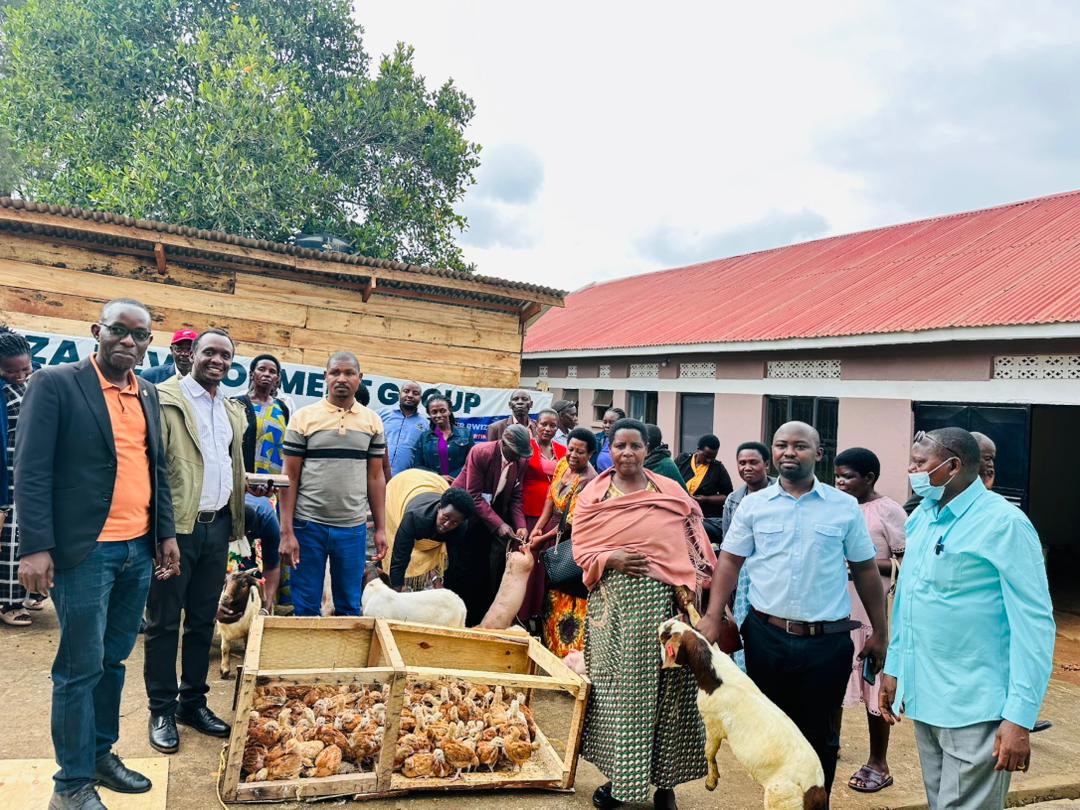
- Livelihood inputs: Pigs (Yorkshire breed), goats (Mubende breed), chickens (layers and Kroilers), beehives, banana tools (forked hoes, pruning knives), vegetable seeds (eggplant, cabbage), improved pasture (Sugar Napier grass from NARO Mbarara ZARDI), protective beekeeping equipment, and water tanks in selected cases.
- Training and capacity building: Technical skills in enterprise management, climate-smart agriculture, energy-saving cookstove construction and use, business skills, and gender-responsive climate adaptation.
- Demonstration support: Model farms equipped for practical learning and peer mentoring.
- Ecosystem benefits: Restored landscapes that improve water regulation, reduce erosion and flood risk, and enhance long-term natural resource availability.
- Social outcomes: Increased women's economic participation, reduced household fuelwood collection burden, and a revolving approach (e.g., piglet sharing) that spreads benefit within groups.
Selected Key Results from the Project/Programme (as of August 2026)
- 24 groups and 30 model farmers fully supported and trained.
- Energy cookstoves: 15 constructed during training sessions with subsequent household adoption.
- Restoration: 100 ha wetland, 30 ha riparian forest, and 100 ha cropping/grazing land achieved; 50 ha of hill slopes/hilltops completed (remaining portion constrained by funding).
- Multiple monitoring visits by MWE, GEF, and Project Steering Committee teams confirmed progress on the ground.